
Payment playbook
Casino Payment Methods Compared
PayID, crypto, Neosurf, direct bank transfer and what happened to credit cards. Deposit and withdraw times, fees, limits, and how to pick the right rail for how you actually play.
 Written by
Joshua K.
Last updated:
Written by
Joshua K.
Last updated:
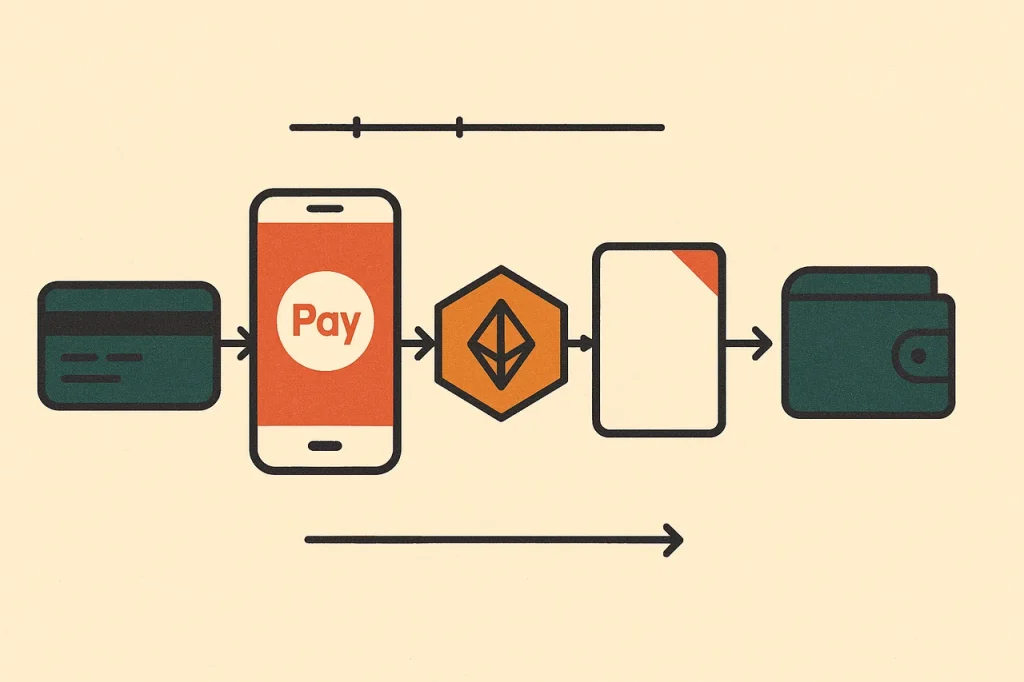
The payment rails that actually work in 2026
The Australian payment landscape at offshore casinos looks nothing like it did three years ago. The 2024 credit card ban reshaped deposit routing, POLi Payments withdrew from the market, and the New Payments Platform pushed PayID into first place for speed. Cryptocurrency filled the anonymity gap credit cards left behind, while Neosurf became the go-to prepaid rail for players who want casinos off their bank statement entirely. Five rails now cover almost every deposit and withdrawal at offshore casinos accepting Australians, and each has a distinct profile of speed, limits, fees and hidden gotchas.
Which rail is right depends on session size, urgency, privacy preference and how comfortable you are with holding crypto. There is no single best method. There is a best method per intent, and the point of this guide is to give you enough detail on each rail to pick the right one at the moment of deposit.
The five rails at a glance
| PayID | Fastest rail overall. Instant deposit, under 1 hour typical withdrawal once approved. Limits usually A$10–A$5,000 per transaction. |
|---|---|
| Cryptocurrency | Bitcoin, Ethereum, Litecoin, Tether. Deposit 10–30 min, withdrawal 15 min to a few hours. No transaction ceilings from the operator side. |
| Neosurf (prepaid voucher) | Instant deposit, deposit-only. Withdrawals redirect to another rail. Vouchers bought in newsagents from A$10 to A$500. |
| Direct bank transfer | Reliable but slow. 1–3 business days each way. No transaction ceiling on most Aussie bank accounts. |
| Debit card | Works but slowest common option. Deposit instant, withdrawal 3–7 business days via card network reversal. |
PayID is the fastest rail for Australian players
PayID rides on the New Payments Platform, the real-time payment network run jointly by every major Australian bank. Instead of routing through a card network and a merchant acquirer, a PayID transaction moves directly between two bank accounts using a shortcut identifier (usually an email, mobile number or ABN). The transfer clears in seconds and is available 24/7 including public holidays. For casino deposits and withdrawals, PayID has become the standard against which every other rail is measured.
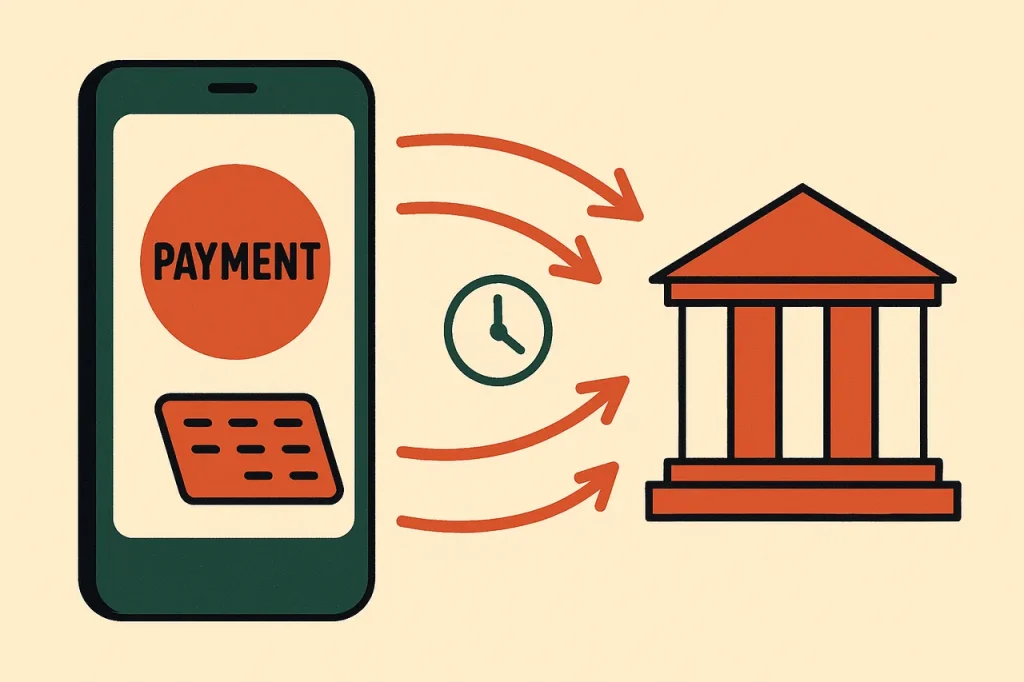
How PayID deposits actually work
At an offshore casino, the deposit flow is short. You choose PayID at cashier, the site displays a PayID identifier (usually a phone number or an alias tied to their processor), you open your banking app, select PayID as the payment type, paste the identifier, confirm the amount and send. The deposit lands in the casino cashier within seconds. Most operators credit your playable balance immediately, some place a very short (2–5 minute) risk-check hold on the first deposit from a new account.
Withdrawal is the reverse. You request a withdrawal in the cashier, the operator processes internal approval (this varies from instant to a few hours depending on the site), then dispatches to your PayID. Once dispatched, the money hits your bank in seconds. The bottleneck is almost always the operator’s internal approval, not the rail itself.
PayID limits at typical offshore operators
| Minimum deposit | A$10 to A$20 depending on operator. Some sites let you deposit as little as A$5. |
|---|---|
| Maximum deposit per transaction | A$5,000 typical. Some VIP tiers unlock A$25,000. Bank NPP limits usually cap at A$100,000 per day. |
| Withdrawal ceiling per request | A$4,000 typical single withdrawal. Larger amounts split across multiple requests over consecutive days. |
| Fees | Almost always zero on both deposit and withdrawal at offshore casinos. Your bank does not charge for PayID. |
Cryptocurrency covers everything PayID cannot
Bitcoin, Ethereum, Litecoin and Tether cover the crypto side of the casino payment landscape. Each has slightly different characteristics but they share three things PayID cannot deliver. No transaction ceiling from the operator, complete circumvention of any bank-side gambling block, and privacy at the payment layer that no other rail offers.
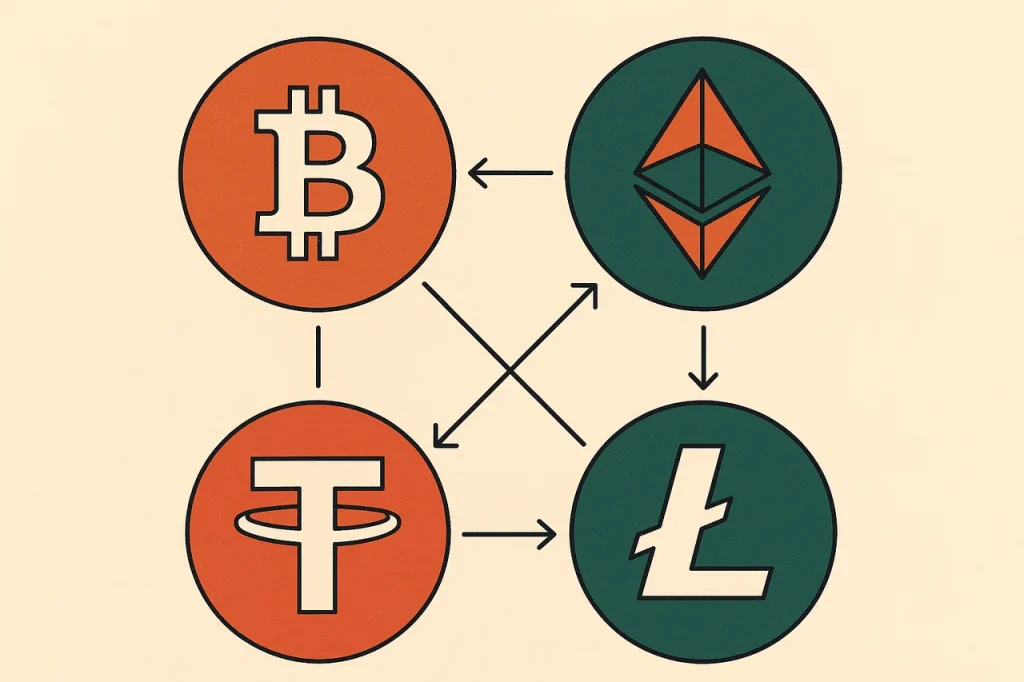
Four common crypto rails compared
Deposit and withdrawal times, network-fee expectations and best use for each of the big four.
| Feature | Coin | Typical times | Best for |
|---|---|---|---|
| Bitcoin (BTC) | 20–60 min each way | Larger deposits, most accepted rail | |
| Ethereum (ETH) | Yes 10–20 min each way | Balance of speed and universal acceptance | |
| Tether (USDT) | Yes 5–15 min each way (TRC20) | Yes Stablecoin. No AUD-to-crypto volatility risk | |
| Litecoin (LTC) | Yes 5–15 min each way | Yes Cheapest network fees, small deposits |
Times assume standard mempool conditions. Bitcoin can extend to a few hours during network congestion.
The stablecoin advantage most players miss
Tether (USDT) and USDC solve the biggest practical problem with crypto deposits, which is exchange-rate volatility. A player who buys 200 dollars of Bitcoin, deposits it, then plays for a few hours can find that Bitcoin has dropped 3 per cent while they were spinning, silently eating three per cent of their bankroll before the casino has taken a cent. Stablecoins are pegged one-to-one to the US dollar, so the AUD value of the deposit stays constant across the session. For any deposit above about A$500, USDT or USDC on the TRC20 network is the least-friction crypto rail available in 2026.
Neosurf is the prepaid rail worth knowing
Neosurf is a prepaid voucher system available at over 4,000 Australian newsagents, post offices and convenience stores. You buy a physical voucher denominated in AUD (10, 25, 50, 100 and 500 dollar amounts are standard), the voucher carries a unique 10-digit code, and you enter that code at the casino cashier to deposit exactly the voucher value. No bank account link, no card, no crypto wallet.
When Neosurf is the right choice
- You want casino spend off your bank statement entirely
- Your bank has a gambling block you cannot easily disable
- You want a hard budget cap enforced by the voucher amount
- You are running a first-deposit test at a new operator
- You need to withdraw (Neosurf is deposit-only; withdrawals redirect to bank or crypto)
- Deposit is above A$500 (the largest common voucher denomination)
- You need to top up quickly at 2am (newsagents are closed)
- You want to earn the operator's bonus program (some sites exclude Neosurf deposits)
What happened to credit cards, POLi and bank transfers
Three shifts reshaped the traditional payment mix between 2023 and 2025. The federal credit card ban made credit-instrument gambling deposits illegal on any operator serving Australians (offshore included). POLi Payments, which had been the workhorse for direct-bank-transfer casino deposits since the mid-2010s, withdrew from the Australian market in mid-2024 in response to the tightening compliance environment. And direct bank transfers, while still available, became progressively slower as banks added additional gambling-transaction risk checks to comply with AML tightening.
The credit card ban and what you can still do
Since 12 June 2024, Australian banks are required to block credit card transactions routed to gambling merchant codes, and the operator is required to refuse the transaction on their side too. This applies to offshore operators just as much as to domestic wagering. Credit-linked digital wallets (BNPL products, credit-tied Apple Pay tokens) are also inside the ban. Debit cards remain legal and functional. If your Apple Pay is set up with a debit card as the primary card, it still works. If you are using a debit card at the cashier and the transaction bounces, check whether the card is set up with a linked credit facility, which some Australian banks now bundle by default.
Bank transfer is slow but reliable
Direct bank transfer via BSB and account number still works at almost every offshore casino, but it is the slowest common rail. Deposit takes 1 to 3 business days depending on which banks are on each side of the transfer, and withdrawal is similar. Fees are usually zero. The main use case is large single-transaction amounts (above A$5,000) where PayID would need to be split across days. Some operators impose a small minimum for bank transfers, typically A$50 to A$100, because the manual reconciliation cost outweighs smaller deposits.
Deposit and withdrawal times at a glance
Speed is where the rails differ most. Deposit speed is usually within a factor of two across all methods. Withdrawal speed varies by an order of magnitude, and the operator’s internal approval stage adds a variable that no rail can fix.

Timings on typical offshore operators
Assumes standard operator processing (KYC complete, no bonus lockout). Ranges reflect fastest to slowest across the AU-facing operator base.
| Feature | Method | Deposit | Withdrawal |
|---|---|---|---|
| PayID | Yes Instant | Yes 10 min – 4 hours | |
| Crypto (BTC, ETH, USDT, LTC) | Yes 5 min – 1 hour | Yes 15 min – 3 hours | |
| Neosurf | Yes Instant | No N/A (deposit only) | |
| Direct bank transfer | 1 – 3 business days | 1 – 3 business days | |
| Debit card | Yes Instant | No 3 – 7 business days |
Withdrawal timing includes the operator's internal approval stage, which is usually the largest contributor to variance.
Fees and hidden costs by rail
Direct fees from the offshore operator are almost always zero on every rail. What differs is the ambient cost that comes with the rail itself. Some are on-chain network fees, some are exchange spreads when you buy crypto, some are physical voucher spreads at the newsagent. Adding these up before committing to a rail keeps the true deposit cost in view.
The real cost per rail
| PayID | Zero. Bank does not charge, operator does not charge. |
|---|---|
| Bitcoin | Network fee A$1 to A$10 depending on mempool + 1 to 3 per cent exchange spread when buying with AUD. |
| Ethereum / Layer 2 | Network fee A$0.10 to A$3 on Layer 2 (Polygon, Arbitrum) + 1 to 2 per cent exchange spread. |
| Tether TRC20 | Network fee usually free or under A$0.50 + 0.5 to 1 per cent exchange spread. |
| Neosurf | 3 to 5 per cent voucher spread at retail + A$0 operator fee. Effective cost is the retailer markup. |
How to pick the right rail for your play style
Rail selection depends on three questions that go in the same order every time. How much are you depositing, how quickly do you want to be able to cash out, and how much privacy from your bank statement do you want. Working through them in that order narrows the shortlist to one rail almost every time.
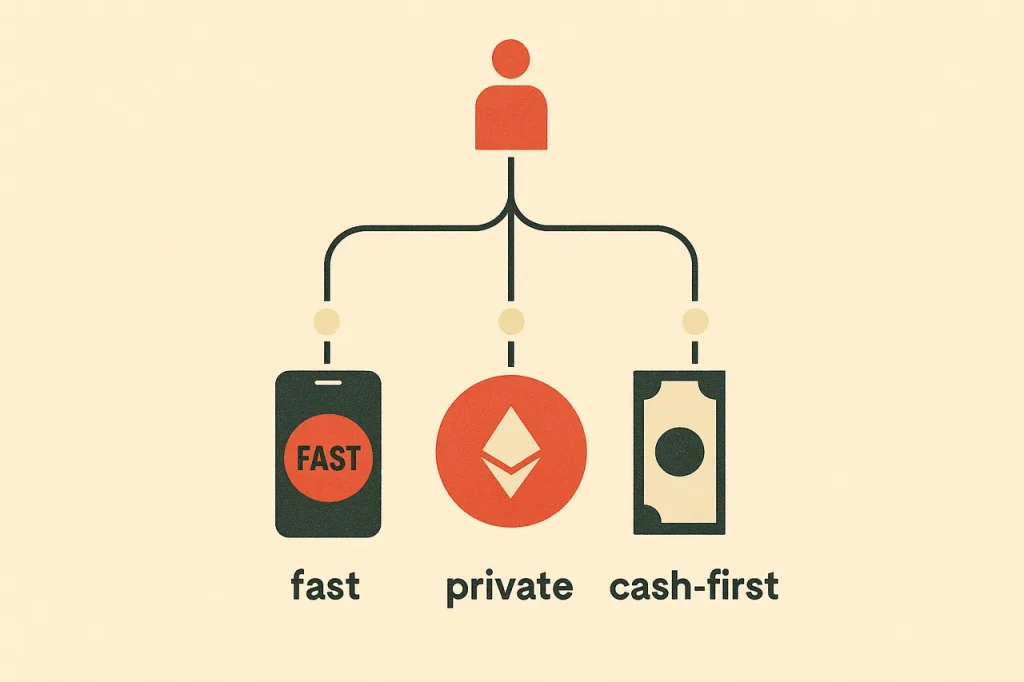
The three-question rail picker
Answer in order. Each answer prunes the shortlist.
-
Deposit under A$500 and want it fast
PayID is the default. Fastest deposit, no fees, easiest withdrawal path once the operator approves. This is the right rail for the majority of casual sessions.
-
Deposit above A$500 or bank has a gambling block on
Cryptocurrency is the right rail. Tether TRC20 for stable-value deposits, Litecoin for cheap small ones, Bitcoin for larger amounts to established operators.
-
Want casino spend off your bank statement completely
Neosurf. Cash purchase at a newsagent, code redemption at the cashier. No bank record connects the two.
-
Large single-transaction amount above A$5,000
Direct bank transfer or a single large crypto deposit in USDT or BTC. Bank transfer is slower but simpler. Crypto is faster but requires a wallet setup.
Common payment problems and how to fix them
Almost every payment failure at an offshore casino falls into one of four categories, and each has a different fix. Diagnosing the category before contacting operator support saves time and gets a resolution faster.
Four failure patterns and their fixes
If a deposit or withdrawal fails, one of the four below is almost certainly what happened.
-
Deposit bounces silently at the bank
Bank-side gambling block is on. Check the bank app under Card Controls or Gambling Block, toggle off if you want to proceed, or switch to a secondary account without the block.
-
Withdrawal sits pending for more than 48 hours
KYC verification is not complete on your account. Send the operator your identity documents (driver licence, Medicare card, address proof) via the KYC portal. Withdrawals usually process within 24 hours after KYC clears.
-
Crypto deposit shows as unconfirmed for hours
Network congestion or you paid too low a fee. Bitcoin can extend to 6 hours during peak. Wait it out (the transaction will confirm eventually) or contact operator support with the transaction ID.
-
Debit card deposit fails with no reason given
The card carries an implicit credit facility your bank flagged as credit-instrument-under-the-2023-amendment. Use a pure debit card without linked credit, or switch to PayID.
KYC verification and how it changes your first cashout
Every offshore casino accepting Australian players runs Know Your Customer verification before the first withdrawal clears. It is a licensing requirement across every jurisdiction that supplies the AU market (Curaçao, Malta, Anjouan) and it applies to your first cashout regardless of deposit rail. Understanding what KYC actually asks for and when it triggers saves a full day of pending-withdrawal frustration on almost every new operator.
What KYC actually needs from you
| Identity document | Australian driver licence, Medicare card or passport. Photo of the front and back where applicable. Legible corners are the failure mode. |
|---|---|
| Address proof | Utility bill or bank statement in your name, dated within the last three months, showing your residential address matching the account. |
| Payment method verification | Screenshot of the bank statement line showing your deposit, or the crypto wallet address you deposited from. Confirms funds came from you. |
| Source of funds (large amounts only) | Requested only for deposits over A$5,000 in a single transaction or A$15,000 cumulative. Payslip or bank statement showing income origin. |
How the deposit rail affects KYC timing
Rails vary in how much KYC evidence they carry inherently. PayID and direct bank transfer already tie your identity to the deposit via the bank layer, so operators sometimes accept a lighter KYC pack (identity plus address only, no separate payment verification). Cryptocurrency deposits carry no identity signal at the rail level, so KYC always includes the wallet-address confirmation step, and some operators add source-of-funds questions at lower thresholds for crypto than for bank deposits. Neosurf falls between the two: the voucher purchase is anonymous but redemption ties it to your account, so KYC is standard scope.
Frequently asked questions
PayID once the operator approves the withdrawal. Once dispatched, funds land in your bank in seconds. The operator’s internal approval stage is usually the bottleneck, so the practical speed depends more on the operator than the rail. Crypto is a close second and often ties or wins when the operator processes withdrawals in batches rather than instantly.
No. Since 12 June 2024, credit card transactions to gambling merchants are blocked at the bank layer under the Interactive Gambling Amendment (Credit and Other Measures) Act 2023. This applies to offshore operators too. Debit cards, PayID and crypto remain functional.
Almost never. Operator-side fees are effectively zero on every common rail. Costs come from network fees on crypto (Bitcoin especially during congestion), voucher spreads at retail for Neosurf, and exchange spreads when converting AUD to crypto. Adding those together is the real deposit cost.
Safer in the privacy sense, similar in the security sense. Crypto keeps casino activity entirely off your bank statement, which matters to some players and not to others. Both rails are equally protected at the operator side by AML and KYC requirements. The choice is about what tradeoffs you prefer, not about safety.
Almost always because KYC is not complete on the account yet. Operators require identity verification (driver licence, Medicare card, address proof) before any withdrawal. Submit the documents through the KYC portal, wait 12 to 24 hours for the operator to verify, and the withdrawal processes normally after that.
Usually not for your first cashout. Most operators require your first withdrawal to match the deposit rail, up to the deposit amount, for AML reasons. Only amounts above total deposits can go to a different rail. After the first withdrawal clears, most operators will let you nominate a different rail for future cashouts.