
Bonus playbook
Casino Bonuses Explained
How wagering requirements really work, what sticky and cashable actually mean, which bonus types are worth claiming, and which small-print rules will quietly wipe your balance if you miss them.
 Written by
Joshua K.
Last updated:
Written by
Joshua K.
Last updated:
What a casino bonus actually gives you
A casino bonus is extra credit added to your account after a qualifying action. That action is usually a deposit but sometimes a registration alone or a promo-code entry. The credit is playable but not immediately withdrawable. Between claiming and cashing out sits a set of terms the operator uses to control the cost of the offer, and understanding those terms is the difference between a bonus that pads your bankroll and one that quietly disappears.
The most common misconception is that bonus credit behaves the same as your deposit. It does not. Most operators separate the two in an accounting ledger, apply different rules to each, and force you to clear a wagering requirement on the bonus before either can convert into a withdrawal. What you actually receive when you claim a bonus is a conditional playing credit, not free cash.
How a bonus sits in your account
| Playable balance | Sum of your deposit plus bonus credit. Fully usable for wagering while the bonus is active. |
|---|---|
| Wagering counter | Total amount you must wager (bet, not net loss) before the bonus converts to real money. Set as a multiplier of the bonus amount. |
| Withdrawable balance | The portion of your credit that has cleared wagering. Usually zero until the requirement is fully met. |
| Bonus expiry | Deadline by which wagering must be complete. Missing the deadline forfeits both the remaining bonus and, on some operators, the winnings from it. |
Wagering requirements decide almost everything
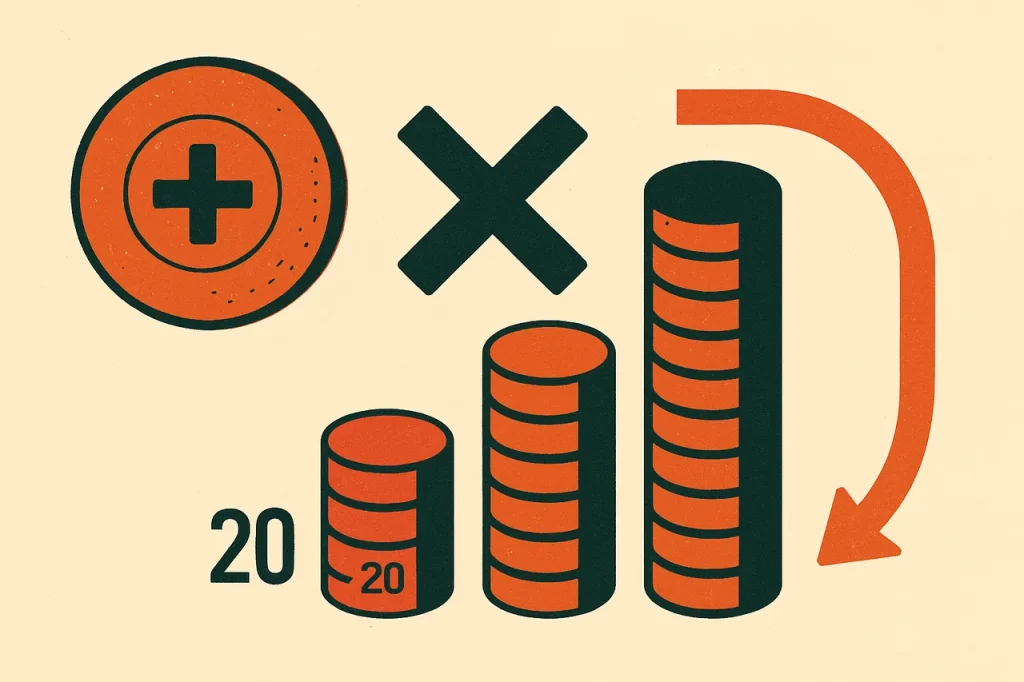
The wagering multiplier is the number after the bonus that says how much you must wager before you can cash out. A 100 dollar bonus at 30x wagering means you must place 3,000 dollars in bets before the bonus converts. That is a lot of spins. The multiplier determines the practical cost of the bonus more than the headline offer size does. A generous match at a high multiplier can end up worse in expected value than a modest match at a low one.
Wagering bands, in one glance
| 20x to 30x | Fair. A 100 dollar bonus at 25x means 2,500 dollars of total wager. Clearable in a normal session at a good-RTP pokie. |
|---|---|
| 35x to 40x | Industry midpoint. Borderline. Only worth it when the bonus itself is generous and the game selection is broad. |
| 45x to 60x | High. Most players will not clear this. Expected value drops below break-even for typical session sizes. |
| 70x and above | Predatory. The bonus is designed to be technically claimable but practically unclearable. Skip. |
How the math actually plays out
Take a 100 dollar deposit with a 100 per cent match to 100 dollar bonus at 35x wagering on bonus only. Total wagering requirement is 3,500 dollars. On a 96 per cent RTP pokie, expected loss over 3,500 dollars of turnover is 4 per cent, or 140 dollars. Which means the expected value of the entire bonus offer, from claim to cashout, is roughly minus 40 dollars from a 200 dollar starting balance. Same offer at 20x is 2,000 dollars of turnover, 80 dollar expected loss, plus 20 dollar expected value on the entire bonus. Same offer, radically different result.
Six bonus types you will see everywhere
The bonus landscape is narrower than it looks. Almost every offer at every offshore casino falls into one of six categories. The types differ in how they trigger, what they pay and which terms typically wrap them, so recognising the category is the first step in reading the offer.

The six categories compared
Typical trigger, typical wagering band and what to watch for on each.
| Feature | Bonus type | Typical wagering | Watch for |
|---|---|---|---|
| Welcome match | 30x – 45x | Bonus + deposit combined wager base | |
| No-deposit bonus | Yes 20x – 40x | Max cashout cap (often A$100) | |
| Free spins | Yes 25x – 40x on winnings | Locked to specific pokies | |
| Reload bonus | 25x – 35x | Yes Recurring, often the best value long term | |
| Cashback | Yes 1x – 5x | Yes Paid on net losses, low wagering, best offer type | |
| High-roller / VIP | 20x – 35x | Personal account manager terms; negotiable |
Ranges reflect the typical band offered by well-known offshore operators serving Australians in 2026.
Sticky and cashable bonuses behave differently
Between claim and cashout, operators use two different bonus mechanics. Cashable bonuses convert to real money when wagering is complete and both bonus and any winnings can be withdrawn. Sticky bonuses can be wagered but the bonus itself cannot ever be withdrawn: only the net winnings above the bonus amount become withdrawable. The label is often buried in the terms, but the difference in expected value is material.
Cashable versus sticky in practice
- Bonus itself converts to real money once wagering clears
- Withdraw includes any wagering-cleared winnings plus the original bonus credit
- Standard on most reload and cashback offers
- Bonus amount is deducted when you cash out; only net winnings above it become withdrawable
- Common on welcome match offers, especially large 200 per cent or 300 per cent matches
- Best used as bankroll extension for high-volatility play, not for withdrawal targets
The fine-print rules that void more winnings than any other
Beyond wagering and bonus type sit three rules that quietly cause the most cancelled winnings on offshore operators. All three are usually documented but easy to miss in the wall of terms. All three carry real consequences if breached: winnings from a session that violated any of them can be voided even after cashout, and repeat breaches can trigger account restrictions.

Max bet with an active bonus
Almost every operator caps the maximum bet size while any bonus is active. The typical cap is A$5 to A$8 per spin, but it varies. Breach the cap once and every winning from that session can be treated as a bonus-abuse violation. This is the single most common cause of voided cashouts on offshore casinos. Set your bet size below the cap the moment you claim a bonus, not after.
Game weighting toward wagering
Not every game contributes 100 per cent to the wagering counter. Pokies are usually 100 per cent, live dealer and table games often contribute 10 per cent or less, and blackjack sometimes contributes zero. Which means clearing a 3,000 dollar wagering requirement on blackjack could require 30,000 dollars of turnover at 10 per cent contribution. Check the weighting table before you plan the session around a specific game.
How to read a bonus offer in three minutes
Every bonus offer has the same handful of levers, and reading them in a fixed order takes about three minutes once the routine is memorised. The five checks below cover 95 per cent of what actually matters. Skip the marketing copy above the terms box entirely; jump straight to the terms.

The five-check bonus review
Do these in order every time. Any red flag on checks 1 to 3 is usually a walk-away signal.
-
Wagering multiplier and base
Find the number after the bonus. Confirm whether it applies to bonus only or bonus plus deposit combined. Above 45x, skip.
-
Sticky vs cashable classification
Look for the phrase bonus balance is non-withdrawable or bonus deducted on cashout. Either signals sticky. A cashable offer usually says the bonus converts to real money after wagering.
-
Max bet with an active bonus
Note the cap in dollars per spin. Set your bet below it the moment the bonus lands. Breaching once can void the entire session.
-
Game weighting
Skim the contribution table. Pokies at 100 per cent is standard. If the game you want to play contributes less than 20 per cent, the offer is not viable for your style.
-
Expiry timer
Check the deadline. Seven days is typical, 24 hours is aggressive, 30 days is generous. Miss the deadline and the bonus and any pending winnings from it are forfeited.
How to actually clear wagering as fast as possible
Once the bonus is claimed and the terms are understood, the practical question becomes how quickly you can push the wagering counter to zero without breaking the terms or draining the bankroll faster than the maths says you should. Three levers matter: game choice, bet size, and session pacing. Getting them right can compress a 3,000 dollar wagering requirement into a two-hour session instead of a two-week grind.
Pick pokies at the 100 per cent weighting band
Almost every operator weights pokies at 100 per cent contribution to the wagering counter. Every dollar of wager on a pokie moves the counter by a dollar. Live dealer and table games often weight at 10 to 20 per cent, which triples or quintuples the total turnover you need. Sticking to pokies at 100 per cent contribution is the single fastest way to clear a bonus, regardless of your usual game preference. The pokies RTP guide covers how to pick titles inside that band with strong session survivability.
Size bets close to the max-bet cap, not above it
Higher bets clear wagering faster, but the max-bet cap sets a hard ceiling. If the cap is A$5 and you have 3,000 dollars of wagering to clear, six hundred A$5 spins clear it. If you set bets at A$1 to be safe, that number balloons to three thousand spins. Sitting close to but under the cap gets the counter down in the shortest number of spins while keeping the session inside terms. Set the exact bet at 80 to 90 per cent of the cap so a mistap does not push you over.
Set your withdrawal target and stop when you hit it
Even after wagering clears, players who keep spinning tend to give back some or all of the gain. Deciding the withdrawal target before the session starts (200 per cent of deposit is a common anchor) and stopping the moment it hits is more useful than any RTP or volatility choice. Wagering clearance is the finish line, not the halfway point. Withdraw the moment the counter hits zero and the balance is above target.
Bonuses worth claiming and bonuses to skip
After running the five checks a few dozen times, patterns emerge. Certain bonus shapes reliably clear and produce net positive expected value across most session sizes. Certain other shapes almost never do. The heuristics below hold up well enough to short-circuit the analysis when the pattern is obvious.
Green lights and red flags
- Reload bonus at 25-30x on bonus only with a A$10+ max bet cap
- Cashback offer with 1x or lower wagering
- No-deposit bonus at 20-30x with a clear cashout cap
- Free spins that pay winnings as cash rather than bonus credit
- Welcome match at 30x or lower on bonus only
- Wagering above 45x, or 60x on bonus plus deposit combined
- Max bet cap under A$3 during bonus play
- Expiry inside 48 hours on a large wagering requirement
- Winnings from free spins capped at 5x spin winnings
- Game weighting where pokies contribute less than 100 per cent
Where the best bonus terms actually land
Better bonus terms tend to cluster at operators competing on retention rather than acquisition alone. Reload bonus programs and cashback schemes usually beat welcome matches on expected value because the operator is optimising for the second, third and tenth deposit. The no-deposit bonus shortlist covers operators that publish clear terms and stick to the fair-wagering band.
Common bonus mistakes that void more winnings than any other
Every offshore operator publishes bonus-abuse clauses that read as legalese until the moment they get invoked. Below are the mistakes that trip readers most often, distilled from public complaint records across Casino Guru, AskGamblers and the CasinoMeister forum. Each one has cost real players real money on real operators, and each is entirely avoidable with a two-minute pre-session check.
Mistake one – betting above the max-bet cap during bonus play
The most common voided-cashout scenario. The player claims a bonus, forgets or ignores the max-bet cap (typically A$5 to A$8), places a single A$10 bet during the session, and every winning from that session is voided at cashout under the bonus-abuse clause. Operators enforce this rigorously because the cap protects them against high-variance strategies designed to convert bonus credit into a single big win. Setting bet size below the cap the moment the bonus lands is non-negotiable.
Mistake two – playing restricted games while a bonus is active
Almost every operator maintains a restricted-games list attached to their bonus terms. The list usually contains high-volatility high-max-win pokies (titles from Nolimit City, Push Gaming and Hacksaw Gaming feature disproportionately), some jackpot-network games, and occasionally live dealer tables. Playing any restricted title with an active bonus voids the bonus and any winnings from it. The restricted list is usually appended to the terms and worth screenshotting before you start.
Mistake three – claiming multiple bonuses on the same account
Most operators cap the number of active bonuses per account and forbid claiming a second bonus while a first is still under wagering. Ignoring the cap can void both bonuses even when they came from different promotional emails. A safer habit is to fully clear or forfeit one bonus before claiming the next, and to keep a single unclaimed bonus queued in the promotion inbox rather than active in the account.
How casinos actually make money on bonuses
Understanding why casinos offer bonuses at all makes the terms much easier to read. A bonus is not free money handed out for goodwill. It is a customer-acquisition budget line item, priced by the marketing team against an expected return per depositor over the customer lifetime. That framing explains almost every wagering-multiplier decision the operator makes.
The wagering requirement grinds bonus value against the house edge
Take a 100 dollar bonus at 40x wagering. Total turnover required is 4,000 dollars. On a 96 per cent RTP pokie, expected loss over 4,000 dollars is 4 per cent, or 160 dollars. The 100 dollar bonus effectively costs the player 60 dollars in expected value to clear. The operator has effectively sold the player 4,000 dollars of gameplay for a 100 dollar acquisition cost that the operator will recover, on average, from the wagering process itself. The higher the multiplier, the closer the bonus gets to being a zero-cost acquisition tool for the casino.
The economics of a 100 dollar bonus by wagering tier
| 20x wagering | 2,000 dollars turnover. Expected loss on a 96% pokie: 80 dollars. Bonus net value to player: +20 dollars. |
|---|---|
| 30x wagering | 3,000 dollars turnover. Expected loss: 120 dollars. Bonus net value: -20 dollars. |
| 40x wagering | 4,000 dollars turnover. Expected loss: 160 dollars. Bonus net value: -60 dollars. |
| 60x wagering | 6,000 dollars turnover. Expected loss: 240 dollars. Bonus net value: -140 dollars. Effectively a marketing giveaway with negative EV. |
Which bonuses cross the break-even line
The break-even line for a 96 per cent RTP pokie sits at roughly 25x wagering on the bonus alone. Below that, the bonus has positive expected value for the player once the maths shakes out. Above that, the bonus turns into negative expected value and the operator wins on average across all claimants. Which is why the 20 to 30x band is worth actively hunting for, and the 45x-plus band is worth structurally avoiding. Cashback and reload offers cluster below the break-even line more often than welcome offers do because retention economics tolerate higher payout ratios than acquisition economics.
Frequently asked questions
It means you must place total bets equal to 30 times the bonus amount before the bonus can convert to withdrawable balance. A 100 dollar bonus at 30x needs 3,000 dollars of total wager, not net loss. Every dollar you stake counts toward the counter regardless of whether you win or lose that spin.
Some are, most are not. The ones worth claiming sit in the 20 to 35x wagering band, apply the multiplier to the bonus alone, and have max-bet caps of at least A$5 per spin. Anything above 45x wagering typically has negative expected value across a normal session.
Yes, if the bonus terms were breached during the session that produced the winnings. The most common breach is exceeding the max-bet cap while the bonus was active. Playing a restricted game is another common trigger. Both are usually documented in the terms and both allow the operator to void the session under standard bonus-abuse clauses.
A cashable bonus converts to real money once wagering is complete, so you withdraw the bonus plus any winnings. A sticky bonus can be wagered but the bonus amount itself is deducted at cashout, so only net winnings above the bonus become withdrawable. Cashable is always the preferred option when both are available.
They usually pay bonus credit that then has to clear a wagering requirement, not cash directly. A few operators run cash-paying free spins where winnings arrive as withdrawable balance. Those are worth prioritising when they appear because they carry no wagering cost.
No. Claim the ones that pass the five checks and skip the rest. Claiming a bonus that will never clear wagering ties up your deposit under bonus rules for no return, and it can lock you out of the operator’s standard cashout process until the bonus expires or is manually forfeited through support.