
Live dealer playbook
Live Dealer Casino Guide
How live dealer works, why Evolution and Pragmatic Live dominate the studio market, which table variants carry the lowest house edge, and how basic strategy on live blackjack halves the edge before you touch a side bet.
 Written by
Joshua K.
Last updated:
Written by
Joshua K.
Last updated:
What live dealer actually is
Live dealer is the format where a real human dealer runs a real physical table from a studio, streams the video to your device, and every card, spin and dice roll happens on camera. Your bets are placed through the digital cashier overlay on the video stream, the dealer sees the aggregate bets in real time, and the outcome is generated by the physical event you are watching. There is no random number generator in the loop, and every important moment (shuffle, deal, spin) is visible to every player at the table simultaneously.
The format sits between the pokie machine and the physical casino. It carries the transparency and pacing of a bricks-and-mortar table but keeps the availability, table selection and minimum-bet flexibility of online play. For Australian players locked out of domestic online casino by the IGA, live dealer at offshore operators is the closest experience to walking into a Crown or Star table.
Live dealer versus RNG casino games
| Outcome generation | Live: physical card/wheel/dice on camera. RNG pokie: server-side pseudo-random number generator. |
|---|---|
| Pace | Live: dealer sets the tempo (30–60 seconds per hand). Pokie: player sets the pace, often 100+ spins per hour. |
| House edge | Live: 0.5% (blackjack) to 2.7% (European roulette). Pokie: 2% (top-tier) to 8% (worst-tier). |
| Bonus wagering contribution | Live: 10–20% typical. Pokie: 100% standard. |
Two providers own the live dealer market
Evolution and Pragmatic Play Live together cover close to ninety per cent of the live dealer table time you will see at Australian-facing offshore casinos. Both operate multiple studios across Europe (Latvia, Malta, Georgia, Romania) and both run 24-hour rotations to cover Asia-Pacific overnight demand from the AU market. Which studio powers your session is decided by the operator, not you, though most large operators licence both catalogues and let players pick between them.
Evolution versus Pragmatic Play Live
Two mature studios competing on catalogue depth, stream quality and game-show polish. Both deliver clean video, licensed operations and rigorous audit trails.
| Feature | Dimension | Market leader Evolution | Pragmatic Play Live |
|---|---|---|---|
| Table catalogue depth | Yes 700+ tables across all formats | 300+ tables, growing fast | |
| Game show titles | Yes Crazy Time, Monopoly Big Baller, Funky Time | Sweet Bonanza CandyLand, Mega Wheel | |
| Stream quality (typical) | Yes 1080p at 25–30 fps, adaptive bitrate | Yes 1080p at 25–30 fps, adaptive bitrate | |
| Table minimums (AUD equivalent) | Yes From A$0.50 up to A$25,000 VIP | Yes From A$0.50 up to A$10,000 VIP | |
| Regulatory footprint | Yes MGA, UKGC, plus 15+ jurisdictions | Yes MGA, UKGC, plus 10+ jurisdictions |
Both studios stream 24/7 and both licence content to virtually every major AU-facing offshore operator.
The four live table categories worth knowing
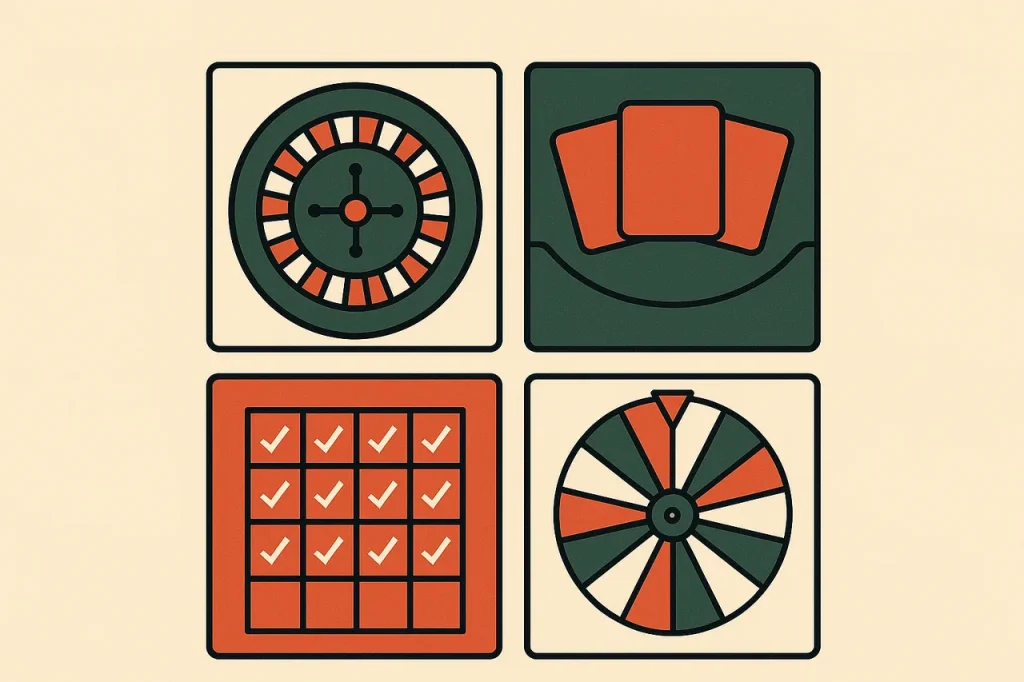
Almost every live dealer table you will encounter at an Australian-facing offshore operator falls into one of four categories. Each carries a distinct maths profile, pace and social vibe. Picking based on what you actually want from the session (concentration versus casual play, low edge versus entertainment) is the first useful decision before choosing a specific table variant.
Live blackjack
Lowest house edge of any casino product. Standard multi-deck live blackjack under basic strategy sits at roughly 0.5 per cent house edge, and some variants (Blackjack Party, Speed Blackjack, Infinite Blackjack) preserve that maths while changing the pacing or the number of players per table. Watch out for the 6:5 payout variant that pays only 1.2x for a natural blackjack instead of 1.5x, which pushes house edge above 1.4 per cent. Any table clearly showing pays 3 to 2 is preferred.
Live roulette
Two main variants sit next to each other at almost every operator. European roulette (single zero) carries a 2.7 per cent house edge. American roulette (double zero) carries 5.26 per cent, almost exactly double. Playing American roulette when a European table is available is a straight cost mistake, and the tables often sit within one click of each other. Some operators also offer French roulette with the la partage rule, which halves the house edge on even-money bets to 1.35 per cent, the sharpest maths on any roulette table.
Live baccarat
The go-to for high-roller live play. Banker bet carries a 1.06 per cent house edge, player bet 1.24 per cent. The tie bet at 14.36 per cent house edge is one of the worst propositions in the entire casino and is worth avoiding entirely. Baccarat is popular with Aussie VIP players because the pace and simplicity suit high-stake sessions, and the pattern-tracking scoreboards give the illusion of strategy without any actual edge implication (every hand is independent).
Live game shows
Crazy Time, Monopoly Live, Sweet Bonanza CandyLand and Dream Catcher are the visible edge of the game-show category. Wheel-based main game with occasional bonus rounds, high entertainment value, and house edges that trade the low-maths advantage of blackjack for spectacle. Expect 3 to 5 per cent house edges depending on the wheel variant, worse on some bonus rounds. Not a serious low-edge play, but the most social of the live categories and the one that pulled a lot of casual players into live dealer for the first time.
House edge across live tables at a glance
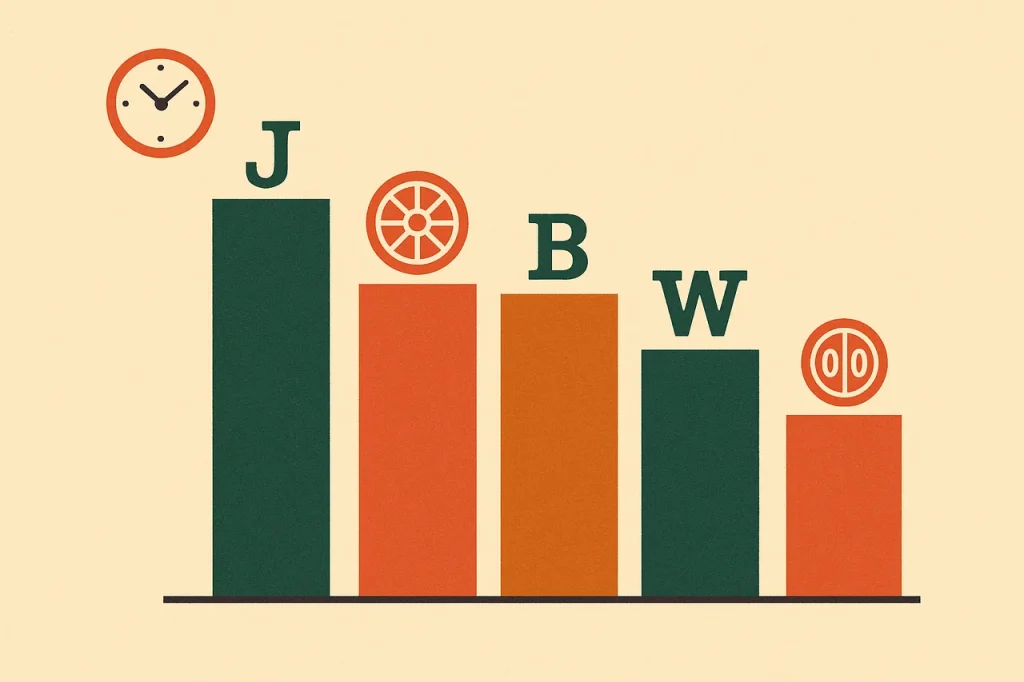
The single most useful piece of information before you sit at a live table is the house edge you are accepting. It varies by an order of magnitude across the live-dealer landscape, from 0.5 per cent on well-played blackjack up to over 5 per cent on some game-show bonus rounds. The chart below covers the common variants side by side.
House edges by common table
| Blackjack (basic strategy, 3:2 pay) | 0.5% house edge. The sharpest maths on any casino table. |
|---|---|
| Baccarat banker bet | 1.06% house edge. Second best after blackjack. Includes the 5% commission. |
| French roulette (la partage) | 1.35% on even-money bets. Best roulette variant available. |
| European roulette | 2.7% house edge on all inside and outside bets. |
| Game shows (main wheel) | 3–5% house edge. Bonus rounds can push higher. |
| American roulette | 5.26% house edge. Nearly double European. Avoid when European is available. |
Basic strategy halves the blackjack house edge
Live blackjack without basic strategy sits at a 2 to 2.5 per cent house edge. Live blackjack with basic strategy drops to 0.5 per cent, and the improvement is available to anyone willing to memorise a small chart. Basic strategy is a lookup table that tells you the mathematically optimal action for every combination of your hand total against the dealer’s up-card. It is not a betting system, not a card-counting technique, not a gimmick. It is the correct answer to every decision, derived from combinatorial analysis of the deck composition.
The five basic strategy rules that cover most hands
The full chart covers every combination. These five rules alone cover roughly 80 per cent of the hands you will actually see and are worth memorising even if you never learn the full chart.
-
Always split aces and 8s
A pair of aces splits into two hands each starting at 11, one of the strongest positions in blackjack. A pair of 8s starts as a 16 (worst hand), splitting turns it into two hands starting at 8, materially better.
-
Never split 10s or 5s
A pair of 10s is 20, one of the strongest totals. Splitting weakens it. A pair of 5s is 10, ideal for a double-down. Splitting it into two hands each starting at 5 is strictly worse.
-
Stand on 17 or higher, hit on 11 or lower, always
These two ranges are unambiguous regardless of the dealer’s up-card. Stand on any hard total of 17+, hit on any total of 11 or less.
-
Hit soft 17, stand soft 18+
A soft hand contains an ace counted as 11. Soft 17 (ace-6) should always be hit; there is no bust risk and improving to soft 18 or hard 17+ is likely. Stand on soft 18 or higher.
-
Never take insurance
The insurance side bet carries a 7 per cent house edge regardless of your hand. It is offered when the dealer shows an ace and it is almost always the wrong bet. Decline every time.
Streaming quality and what you need to run it
Live dealer is video-heavy. A stable 5 to 8 Mbps download stream is enough for 1080p tables, half that for a low-quality fallback that most studios drop to when they detect network throttling. Wi-Fi is fine at close range to the router; mobile 4G and 5G both work well for solo play but can drop frames during peak-hour congestion. The bigger risk is not bandwidth but connection stability: a two-second drop in the middle of a hand can trigger the operator’s disconnection policy, which usually pays out the hand under standard casino rules (dealer completes the hand as dealt) but occasionally voids the bet entirely.
Bandwidth and stability requirements
| Minimum bandwidth (SD quality) | 2 Mbps stable download. Studio auto-downshifts if bandwidth drops below. |
|---|---|
| Recommended bandwidth (HD quality) | 5–8 Mbps stable download. Comfortable for full 1080p at 25–30 fps. |
| Connection stability | More important than raw bandwidth. Prefer wired ethernet or strong Wi-Fi over cellular for extended sessions. |
| Device | Any modern browser (Chrome, Safari, Firefox). Mobile apps supported on iOS 14+ and Android 10+. |
Why live dealer clashes with bonus wagering
Live dealer sits awkwardly with the bonus economy at almost every operator. Because the maths on live tables (especially blackjack) are so much sharper than the pokie maths, operators cannot afford to weight live tables at 100 per cent contribution to wagering clearance without giving away expected value. They compensate by weighting live at 10 to 20 per cent, which means clearing a 3,000 dollar wagering requirement on blackjack requires 15,000 to 30,000 dollars of total turnover instead of 3,000. The casino bonuses guide covers game weighting in depth.
When to play live dealer versus pokies during a bonus
- No bonus is active and you want the sharpest maths available
- You want a paced, considered session rather than fast repetitive spins
- You want the social atmosphere of a physical table without leaving home
- Bankroll is large enough that 30-60 second per-hand pacing is a feature, not a friction
- A bonus is active (100% wagering contribution versus 10-20% is a big gap)
- Session budget is under A$50 (live minimums add up faster than small pokie spins)
- You want variance-driven big-single-hit outcomes
- Mobile-first quick session where video streaming is inconvenient
Table minimums and how to plan a bankroll for live sessions
Live dealer bankroll planning works differently to pokies. On a pokie you divide bankroll by target spins to derive bet size. On a live table you divide bankroll by expected hand count over a fixed session length, factoring in the dealer’s tempo (usually 60 to 90 hands per hour of active blackjack, 30 to 40 spins per hour of roulette). Getting the table minimum right against the bankroll matters more than the game choice at the low end.
Bankroll versus table minimum sizing
| A$50 session bankroll | Play A$0.50–A$1 tables (Evolution First Person or micro-stakes live). Below that and variance ends the session in under 20 hands. |
|---|---|
| A$200 session bankroll | Standard A$1–A$5 tables. 40–200 hands of runway depending on volatility. Blackjack works well here. |
| A$1,000 session bankroll | Mid-stakes tables A$5–A$25 comfortable. Full basic-strategy blackjack sessions with cushion for cold shoes. |
| A$5,000+ session bankroll | VIP tables A$25–A$500. Salon Privé rooms with A$1,000+ minimums become viable for extended play. |
Live dealer etiquette and the mistakes new players make
Live tables are shared with other players, and the operator maintains standards of conduct even though nobody physically sees your face. Understanding what is expected keeps you off support tickets, reduces the risk of a table ejection, and generally makes the session smoother. Most etiquette failures are avoidable with three or four habits picked up in the first hour of play.
Five etiquette rules worth internalising
Not enforced by studio staff every time, but every serious operator monitors chat behaviour and applies warnings to accounts that break these consistently.
-
Place your bet during the betting window, not after
The 10–15 second betting window before each hand is when bets are accepted. Late chip placements after the dealer says No More Bets are voided automatically. Playing quickly and decisively keeps the table pace up.
-
Do not abuse the dealer or other players in chat
Live dealer chat is moderated. Insulting the dealer for cold cards, or hassling other players for their strategy, will get you a warning and eventually a chat ban that can carry across the operator’s entire table catalogue.
-
Tip the dealer if the session goes well (optional but noticed)
A small tip after a good session is standard practice in physical casinos and carries over to live tables. There is usually a Tip button in the interface. Not required, but appreciated and remembered.
-
Do not disconnect mid-hand deliberately
Closing the browser or app during a hand does not void the hand. The dealer completes it under standard rules and the outcome stands. Operators track disconnect patterns and repeated deliberate drops trigger account review.
-
Respect the shared shoe on multi-hand tables
On shared-shoe blackjack, deviating from basic strategy affects other players’ outcomes by changing the cards remaining. If you are playing a non-standard strategy, prefer Infinite Blackjack or First Person tables where deck composition is per-player.
Frequently asked questions
Not safer per se, but more transparent. Every card, spin and dice roll happens on camera in real time, and every player at the table sees the same outcome simultaneously. RNG pokies are audited by independent test labs (eCOGRA, GLI) but the outcome generation is not visible. If watching the maths happen matters to you, live dealer wins on transparency. If maths integrity is what matters, both are equally well audited on established studios.
European roulette. The rules are trivial (bet on a colour, number or range), the maths is fixed at 2.7 per cent house edge regardless of what you bet on, and the tempo lets you follow the game without being under decision-making pressure. Move to blackjack after a session or two, once basic strategy is memorised.
Speed Blackjack deals the card to whichever player acts first, rather than moving clockwise around the table. This roughly doubles the hands-per-hour rate and suits players who dislike waiting for slower opponents to decide. Maths is identical to standard Blackjack. Same rules, same payouts, same basic strategy.
Most modern live-dealer platforms support multi-table view where you can watch two or four tables simultaneously in a split-screen layout. Betting on all of them concurrently is possible but rarely a good idea because the decision windows overlap. Serious multi-tablers stick to two tables with staggered timing.
Depends on what you are buying. If entertainment value matters to you and the bonus-round spectacle of Crazy Time is part of what makes the session fun, the 3 to 5 per cent house edge is the price of that experience. If you want the sharpest maths available, they are strictly worse than blackjack, baccarat or European roulette. Both takes are legitimate; know which you are picking.
Yes at almost every operator, but often at a reduced rate. The comp accrual on live tables is typically 25 to 50 per cent of the pokie rate, mirroring the bonus-wagering weighting. Check the operator’s VIP program terms; the multiplier is usually documented in the loyalty-program page.